 Dileep Dilraj
The idea
A green screen is the cheapest way to make a home office look deliberate on camera. It is also one of the most annoying things to own: too heavy to move, too narrow to stand in front of, and slow enough to set up that most people stop bothering after a fortnight.
I have used these products for years, for recorded video and for everyday meetings, and every one of them traded one problem for another. GREP is the concept I designed to stop making that trade.
GREP - Green Rolling Extendable Projection - is a green screen that rolls up like a blind, extends to any width by locking rollers end to end, and turns over to give you a white projection screen. It came out of one question I kept returning to: why does a backdrop have to be a single-purpose object?
What GREP is
Introducing GREP, a versatile green screen for professional video backgrounds. It's lightweight, portable and extendable, with a green side for videos and a white side for presentations or as a whiteboard. GREP is easy to carry and can be hung on a desk to save space.
It includes accessories like an office chair slider, sticky hooks, magnetic lights and a desk hanger, making it easy to set up anywhere - on a chair, a wall, or even from the ceiling. GREP is adjustable in both width and height, so you don't need to buy extra equipment.
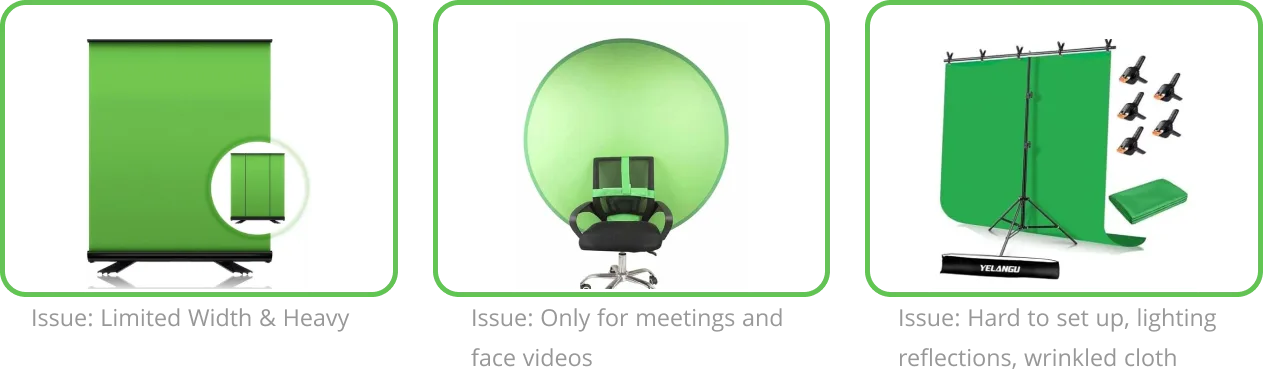
That is the pitch. The rest of this is how I got there. I started with the products I had already owned and used: some took too long to set up, some were too narrow to stand in front of, and every one of them did exactly one job.
These are the products I tested, taken from the top listings at the time.
Why a green screen at all
No product suits everyone. People settle on whichever one gives them the least trouble, so to understand why a green screen earns space in a home office at all, I had to start with what people are actually trying to solve.
Content creation now sits close to the centre of how people teach, sell and present themselves, and the bar for looking professional on camera keeps rising. A clean, controllable background is a large part of the difference between a video that holds attention and one that does not. Background-replacement tools have improved enormously, but they still cut far more accurately against a real green screen than against a bedroom wall.
The demand is clear. The products meeting it have not kept up.
Who I talked to
I interviewed 10 people across different regions and age groups, all of them with real experience of using a green screen and most of them working from a home office.
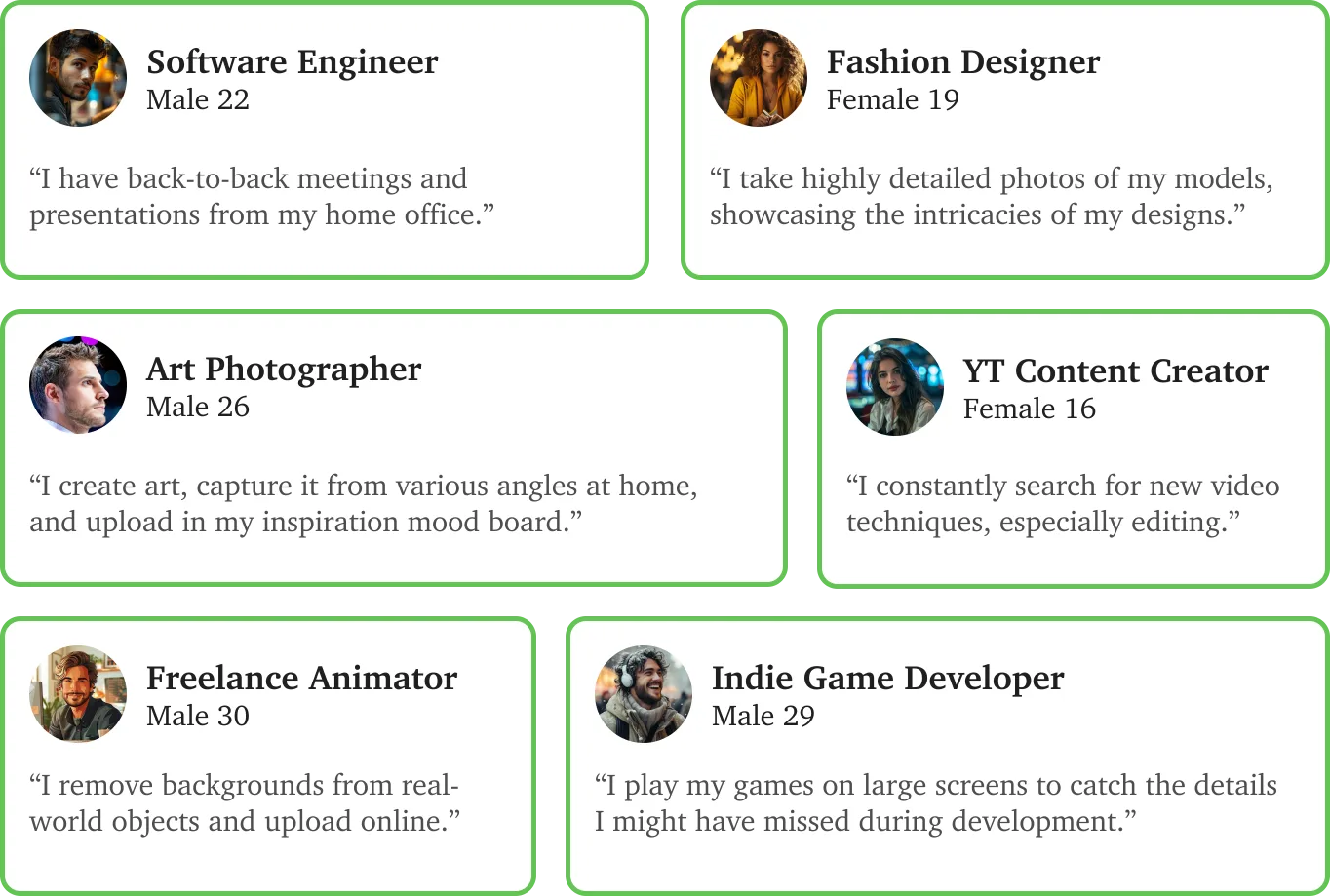
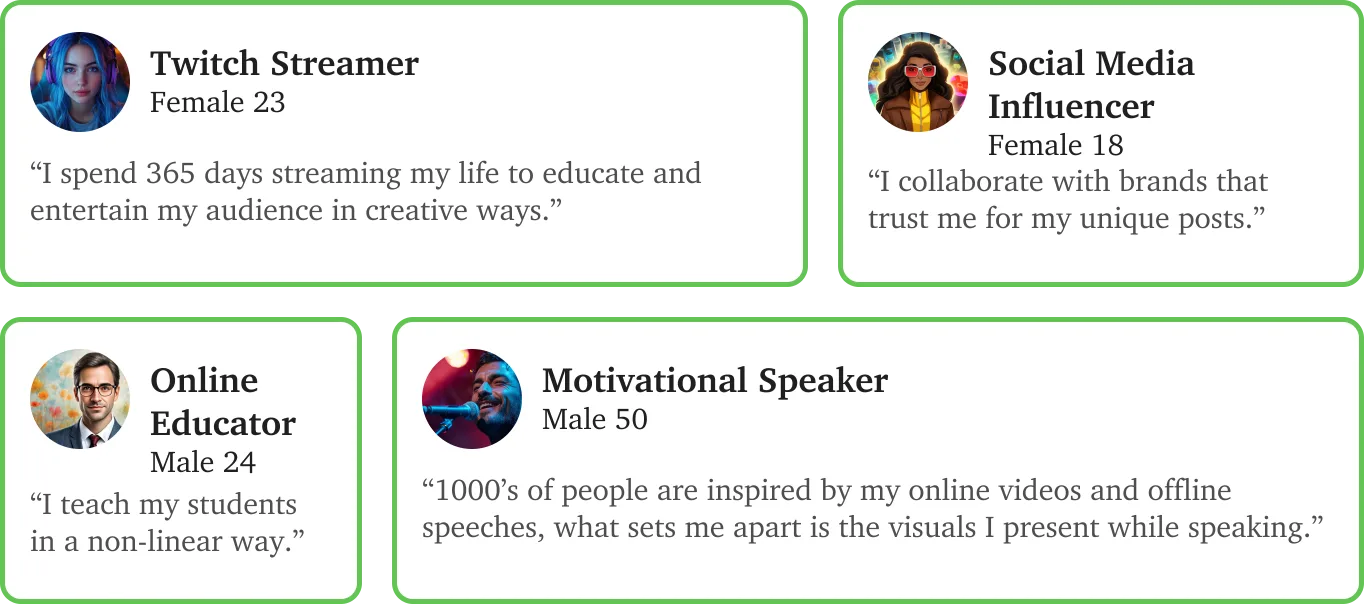
I chose them for the range in how they work rather than for what they do for a living. A spread of ages meant a spread of expectations: some had never once questioned their setup, others had rebuilt theirs three times over. The interviews took the better part of a week, and they shaped the product more than any other input.
What the interviews said
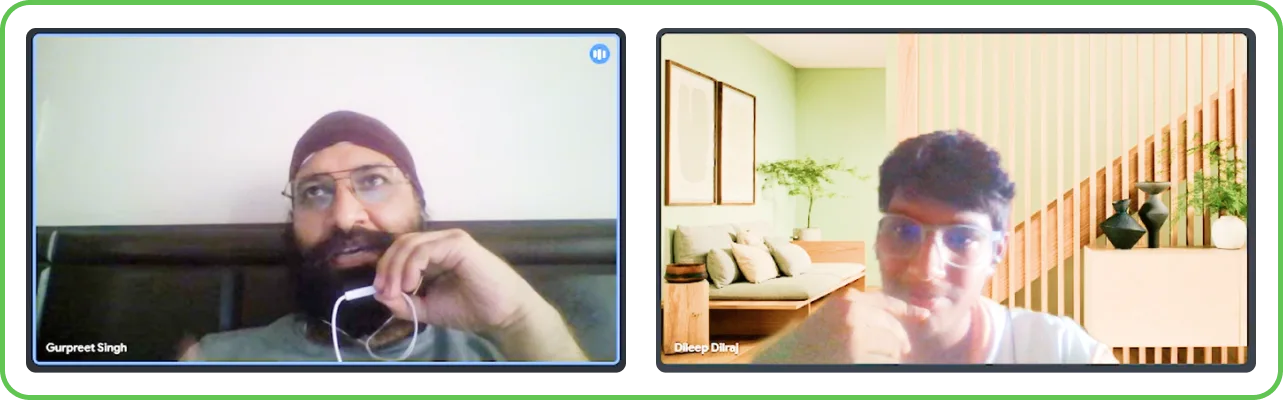
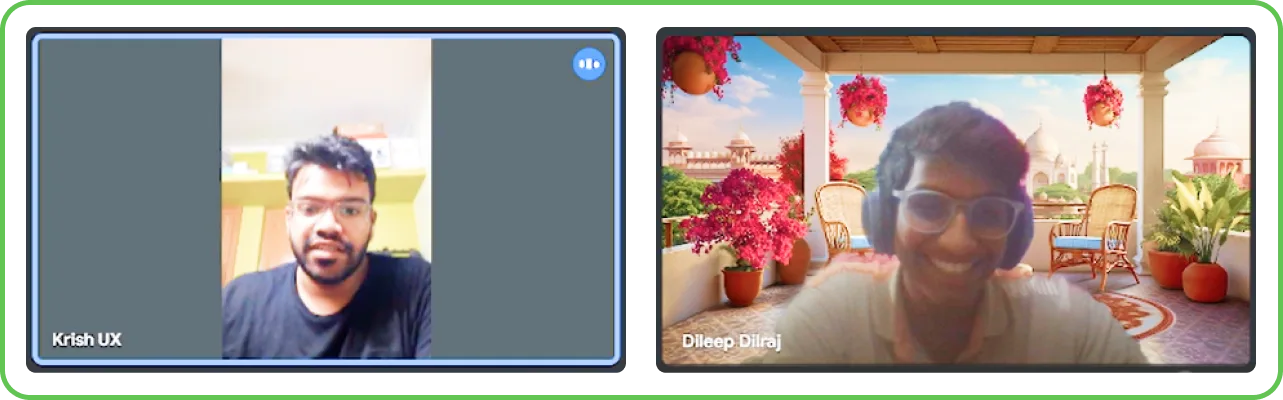
What came out of the interviews, and the market research I ran alongside them:
- Searches for green screen buying advice have risen noticeably.
- The number of content creators and creative agencies keeps growing, particularly in digital marketing.
- Big companies like Google and Microsoft are funding new initiatives like "ProPath", which helps people create professional videos that highlight their unique ways of working and living.
- Green screen sales and listings have grown sharply on e-commerce sites in the USA and China, the two largest markets for daily content production.
The problem
42% of green screen owners end up with a bad experience setting theirs up. Four complaints came up again and again:
Heavy materials
Durable, but awkward to carry and harder still to store in a small home office.
Setup difficulties
Getting a clean result takes long enough that people stop bothering for shorter calls.
Multipurpose use
People want the backdrop to earn its space - a projector screen indoors and out, not a single-use sheet. That is a materials and mechanism problem before it is a styling one.
Maintenance
Cloth attracts dust and holds creases, and both show on camera. A screen that needs washing before every shoot is a screen that gets used less.
Om's problem journey
Let's understand the problem through a journey, in short.
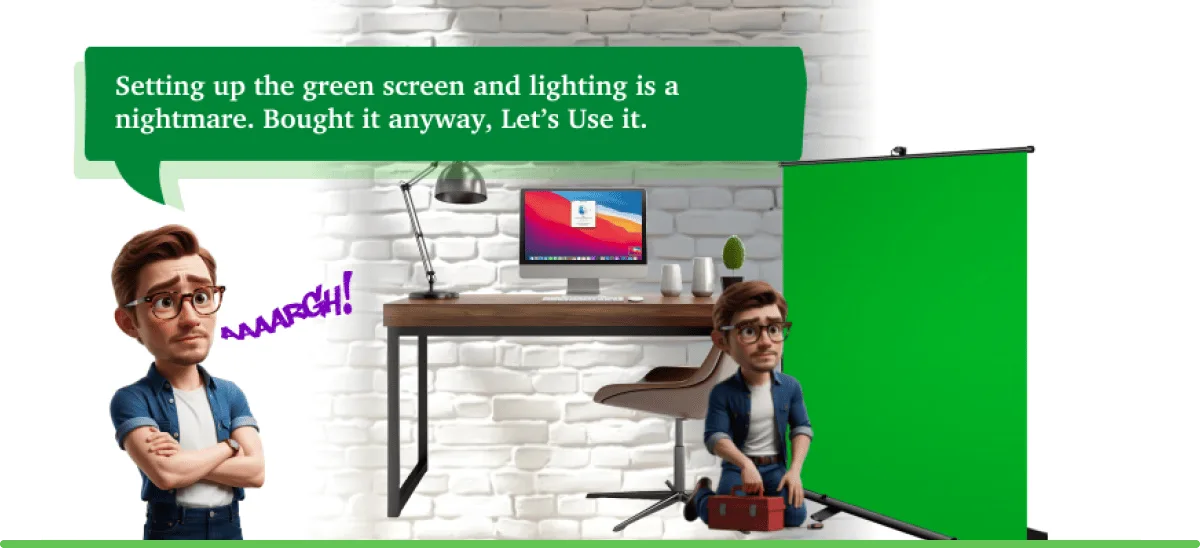
Step 1Om, a software engineer, is fighting the green screen in his home office.
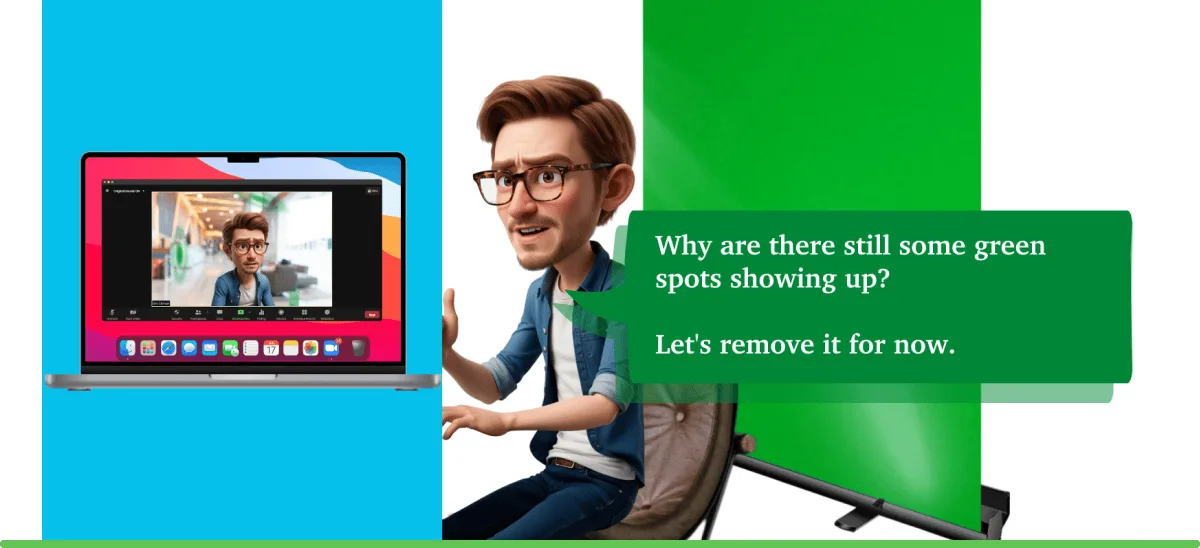
Step 2Poor lighting and a screen too narrow for his camera framing spoil the shot.
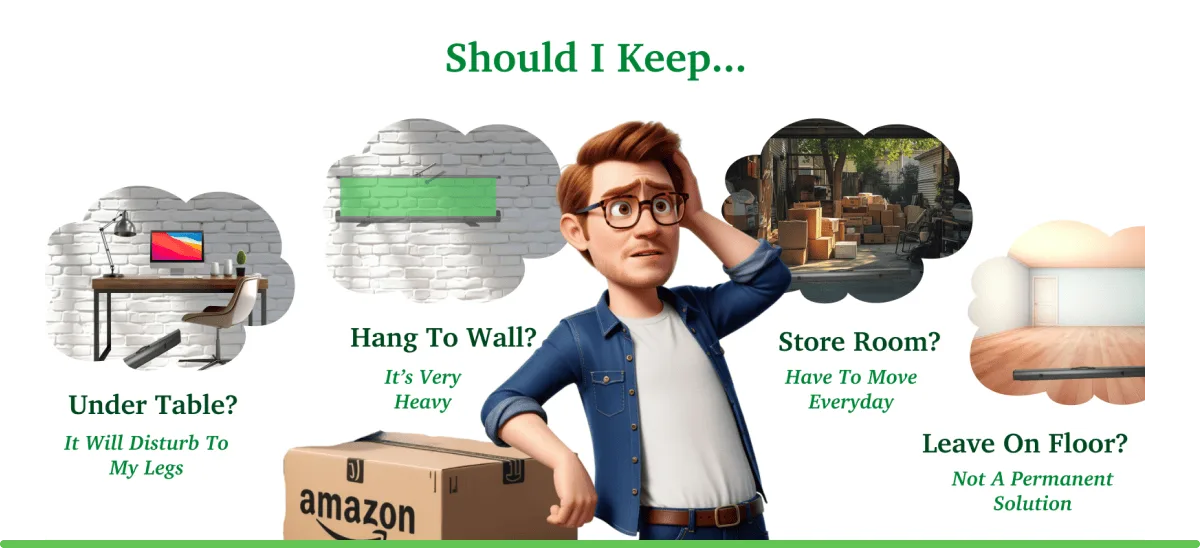
Step 3He has nowhere convenient to put something that large.
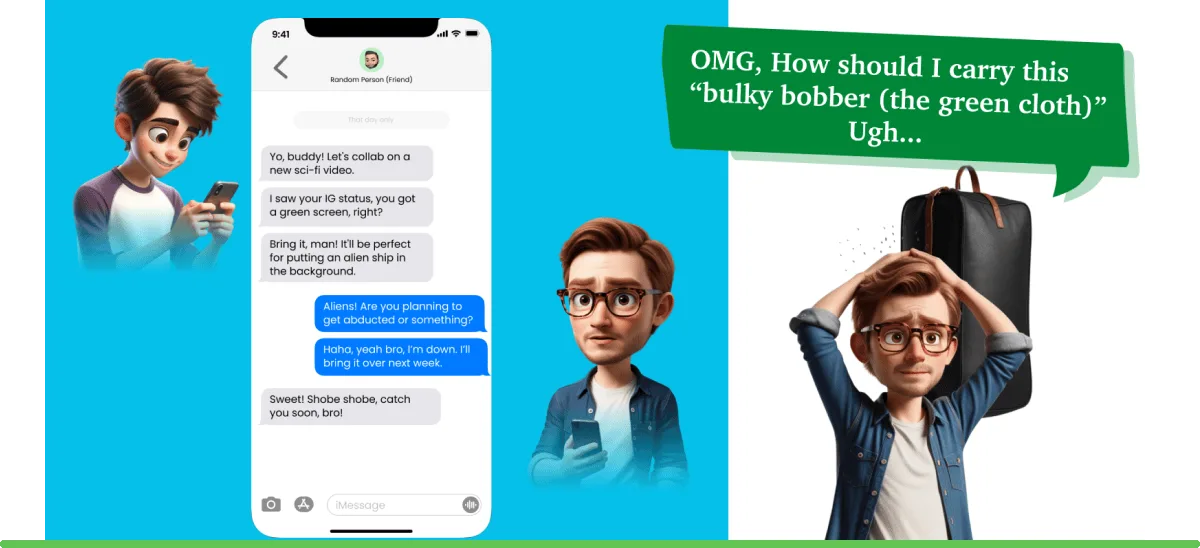
Step 4A friend asks him to collaborate on a sci-fi video. It is too heavy to carry there without a car.
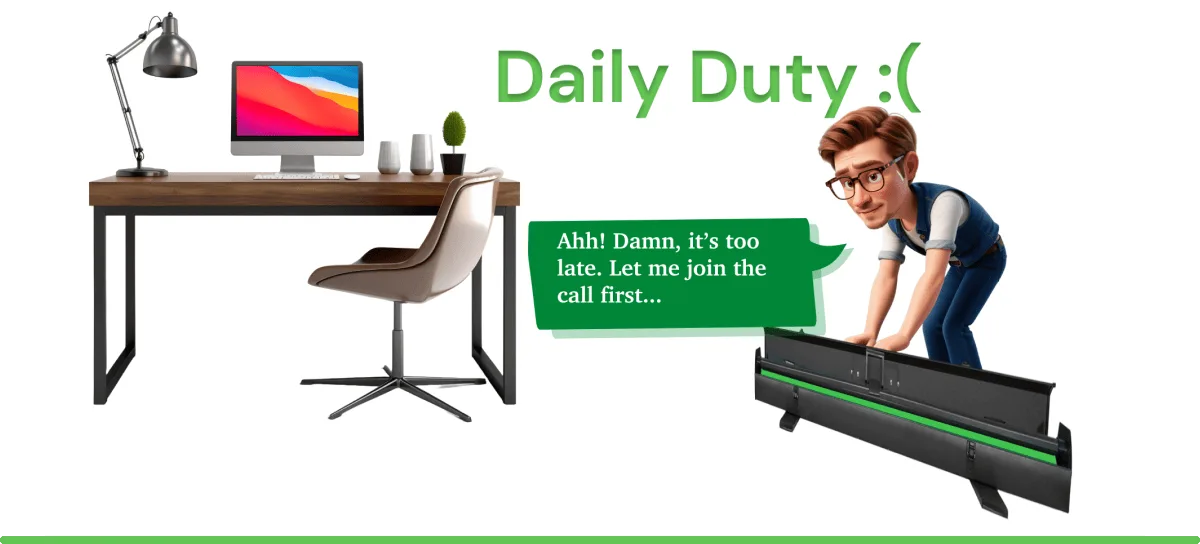
Step 5Opening and closing it for every session takes long enough to become a chore.
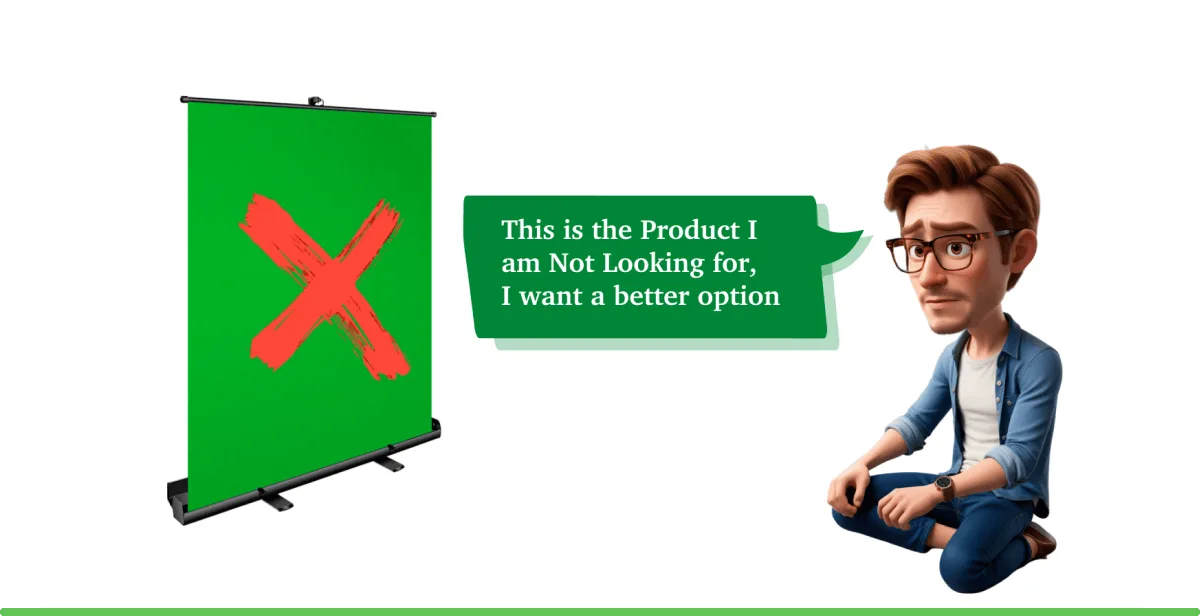
Step 6He regrets the purchase. It solved one problem and introduced four.
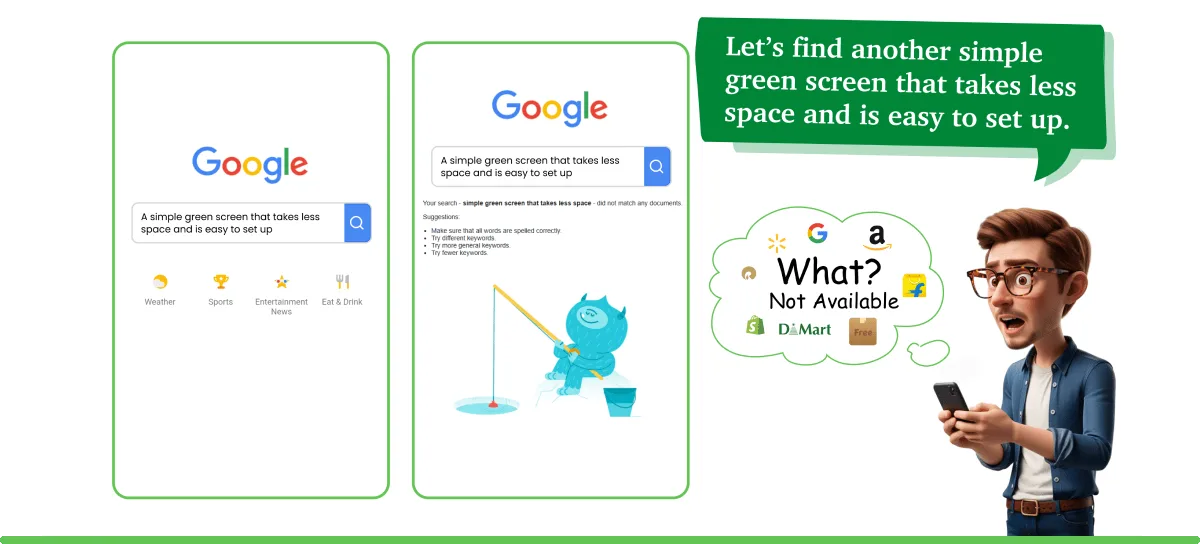
Step 7He goes looking for a better version and finds nothing that fixes all of it.
Every one of those frustrations traces back to the same root: products built to do one job, in one place, at one fixed size.
The solution
I sketched 28 ideas against those four problems. These are the eight that survived:
- Integrated lighting. Light built into the cloth itself, ringed or flat, so the screen lifts its own shadows.
- An origami fold. A structure that collapses flat for storage and transport.
- A bag that hangs. Storage that lives on the side of a desk rather than on the floor.
- Two screens that join. Width added by linking rollers, rather than by buying a bigger one.
- Floor and ceiling mounts. Somewhere to put it in rooms that cannot take a wall fixing.
- Light that adapts. A fitting that responds to the light already in the room.
- A fabric that does not need washing. Long-lasting and low- maintenance, with less waste behind it.
- A second life as a projector screen. Indoors and out, so the object earns its storage space.
Several rounds of refinement later, those eight ideas resolved into one product.
Meet GREP
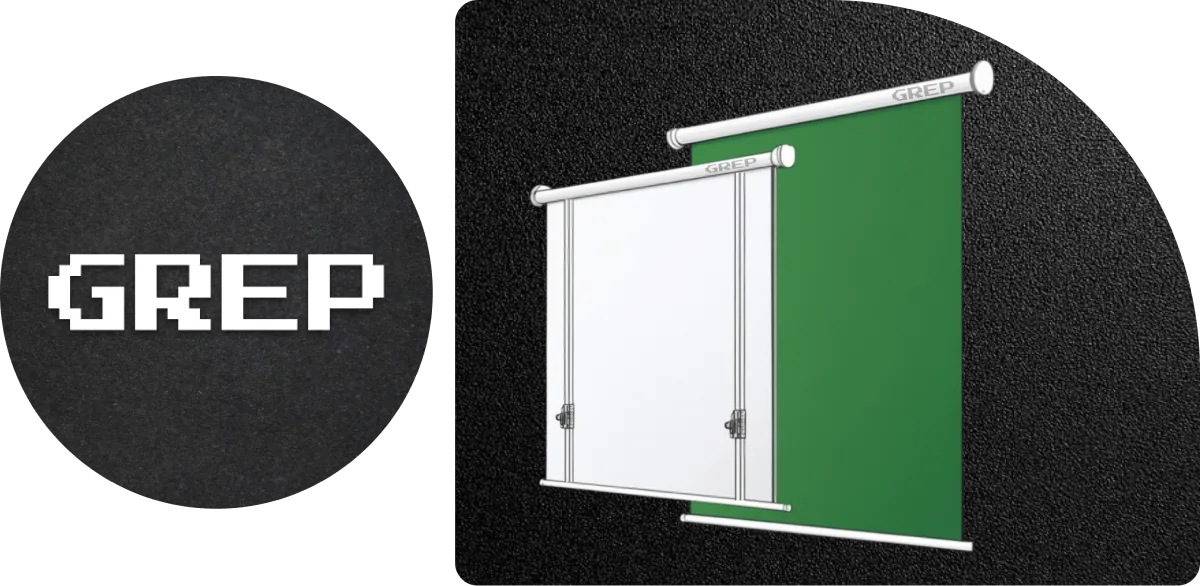
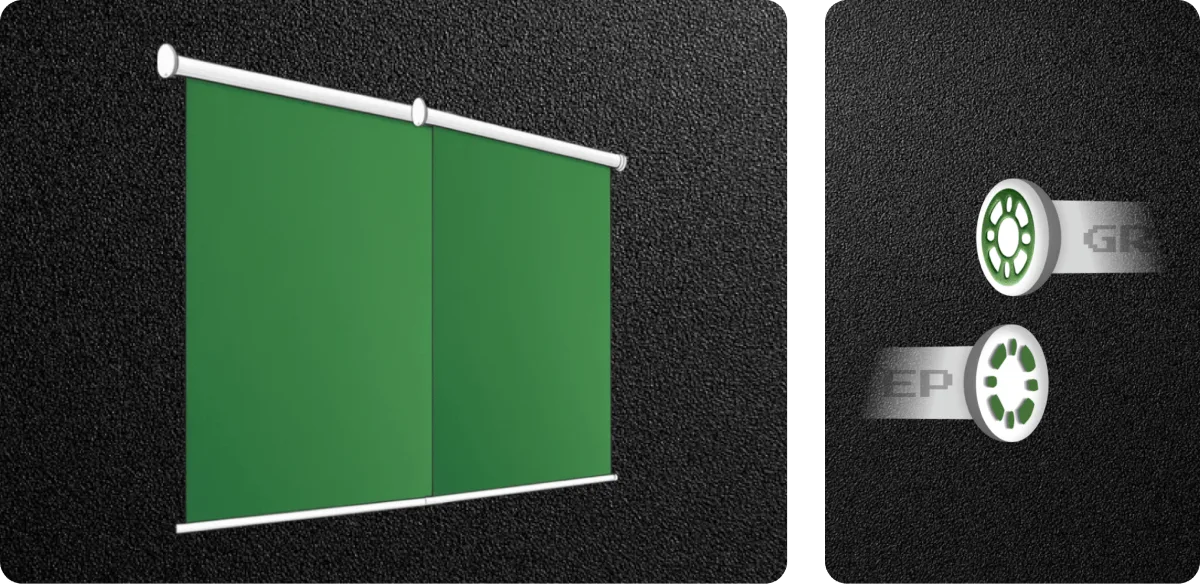
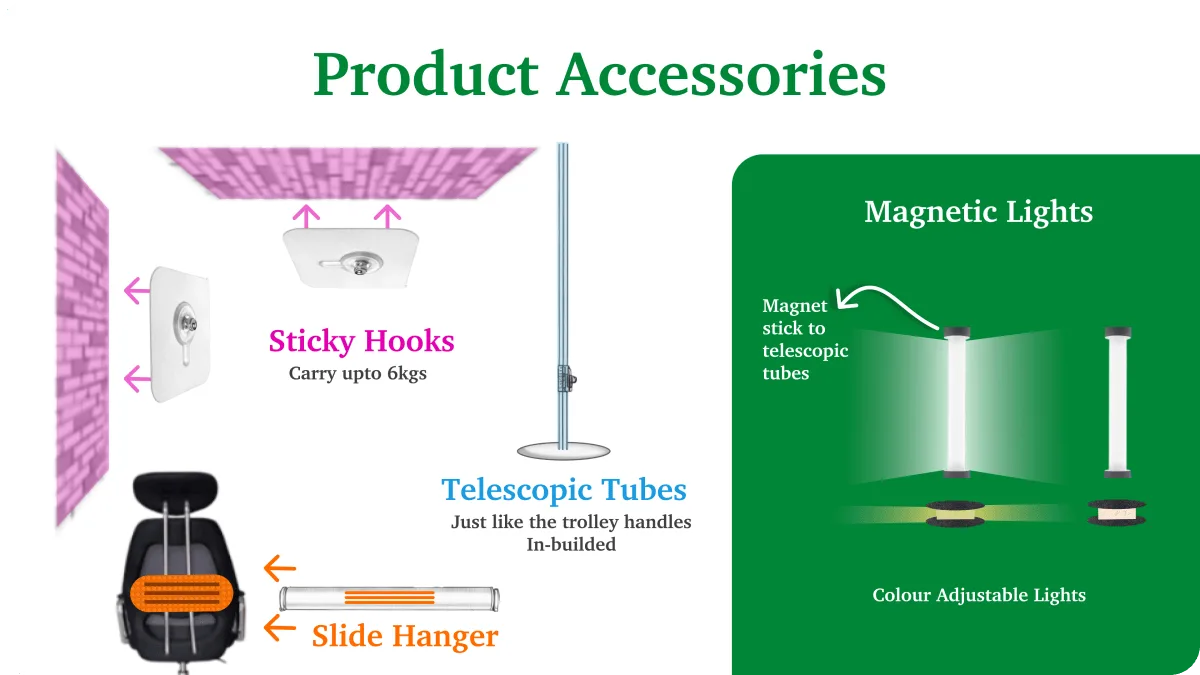
The features, and the diagrams behind them:
- Extension ring locks
- White projection
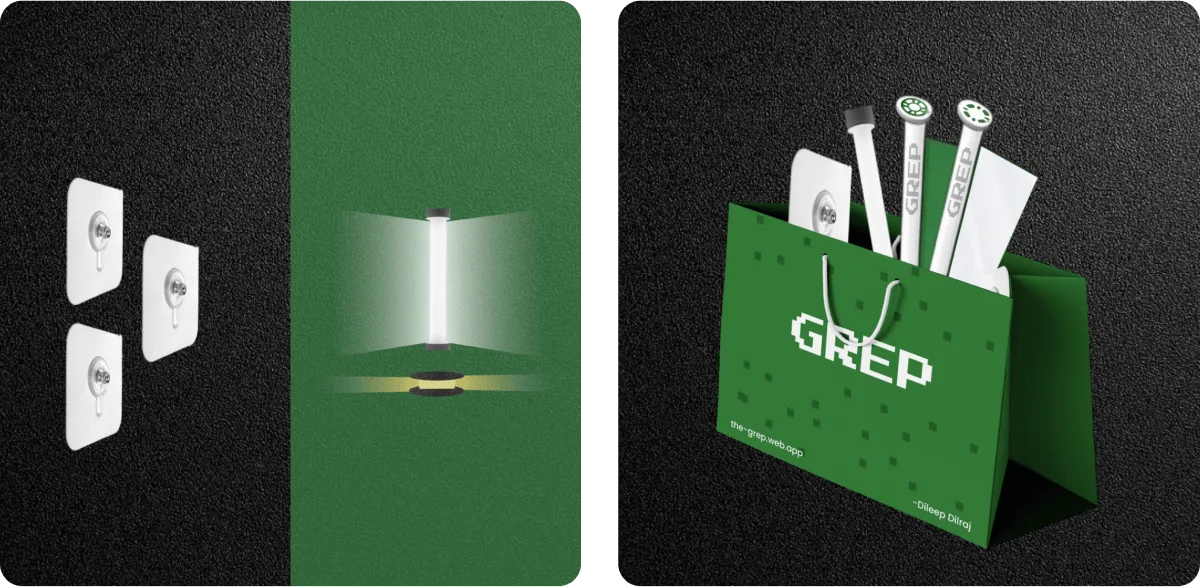
- Sticky hooks
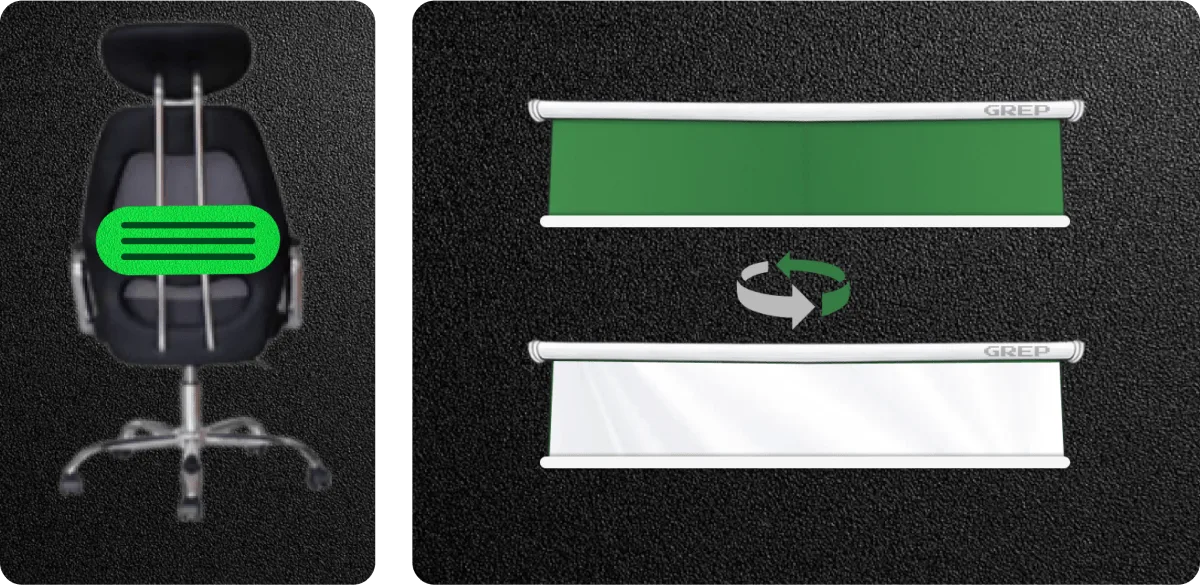
- Mount to chair
- Magnetic lights
- Wrinkle-free cloth
1. Extension ring locks
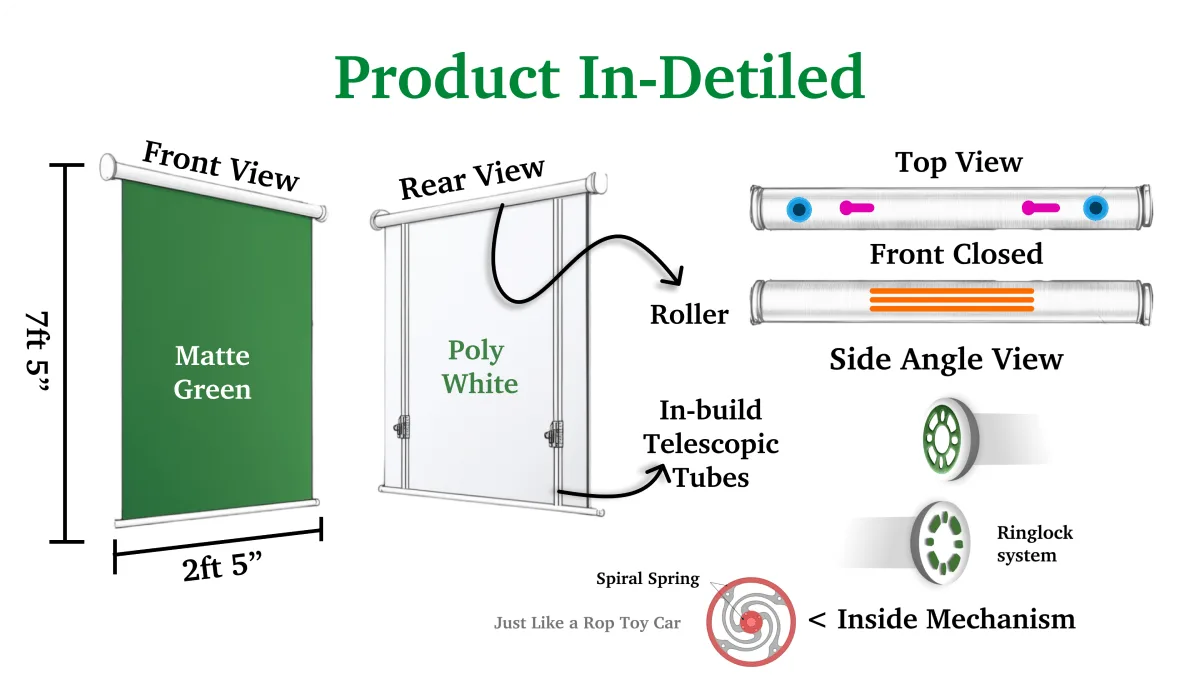
If you need a wider screen than the one you own, the market's answer is to buy a bigger one. GREP's answer is a ring lock at each end: rotate it and a second roller joins onto the first.
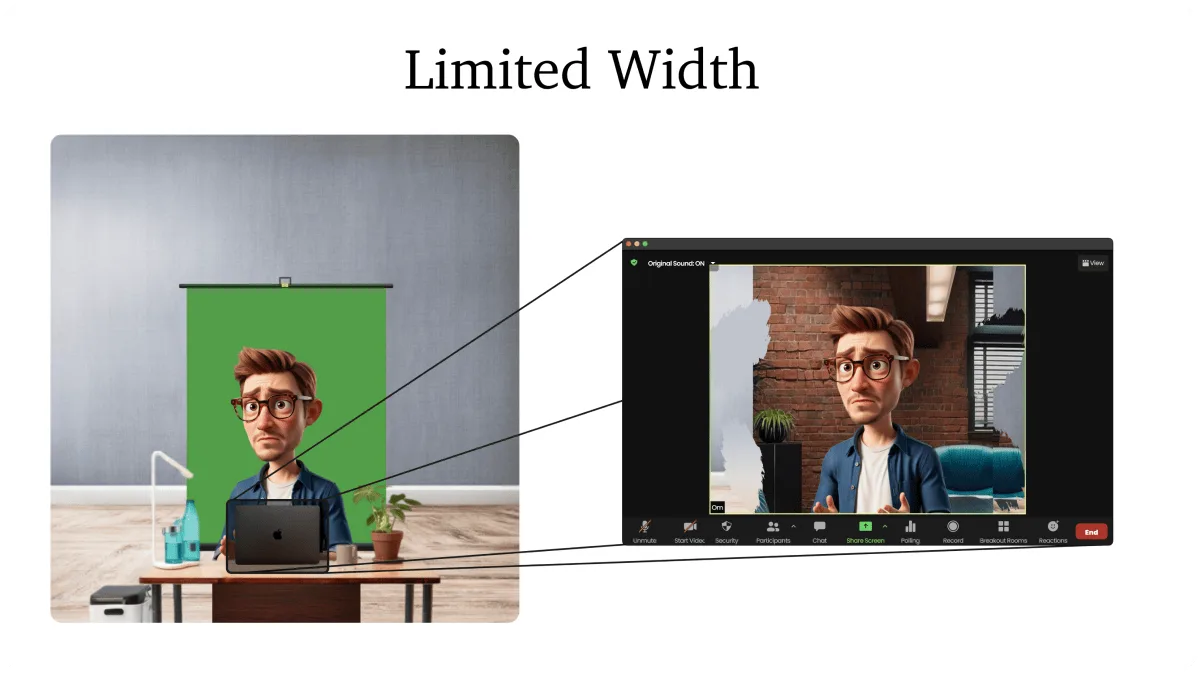
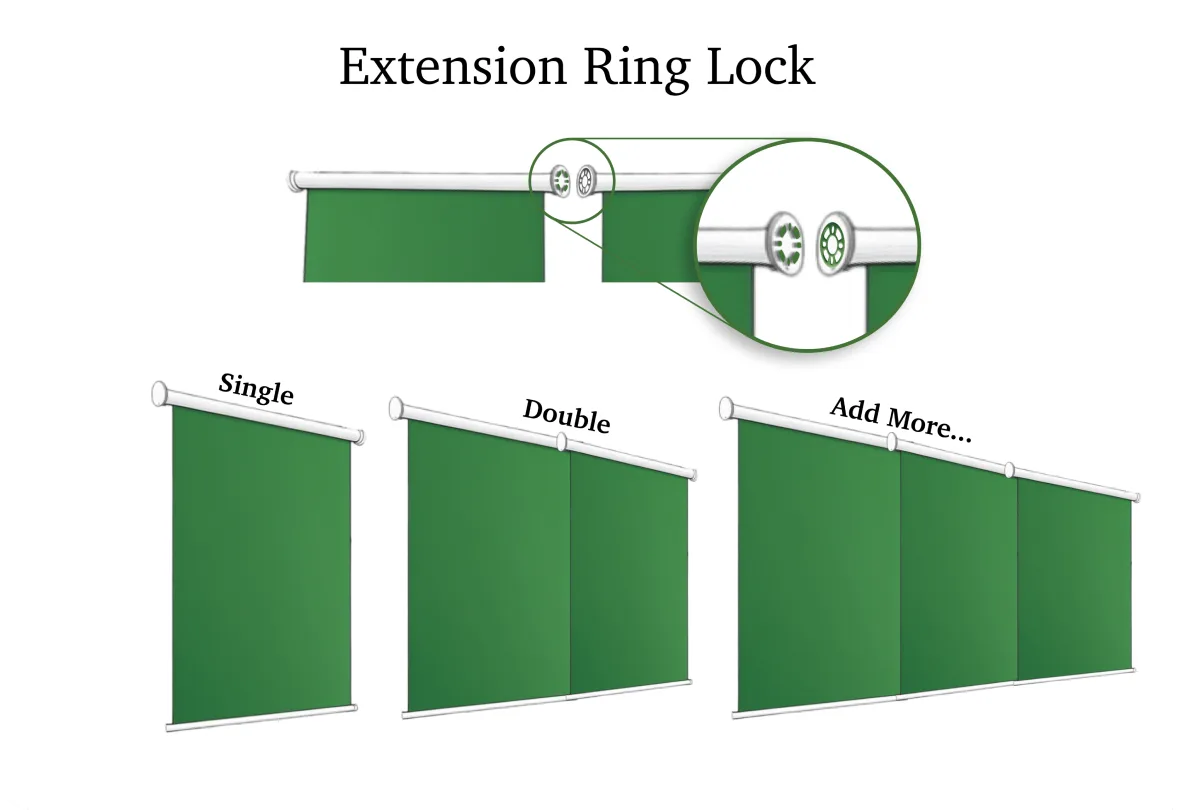
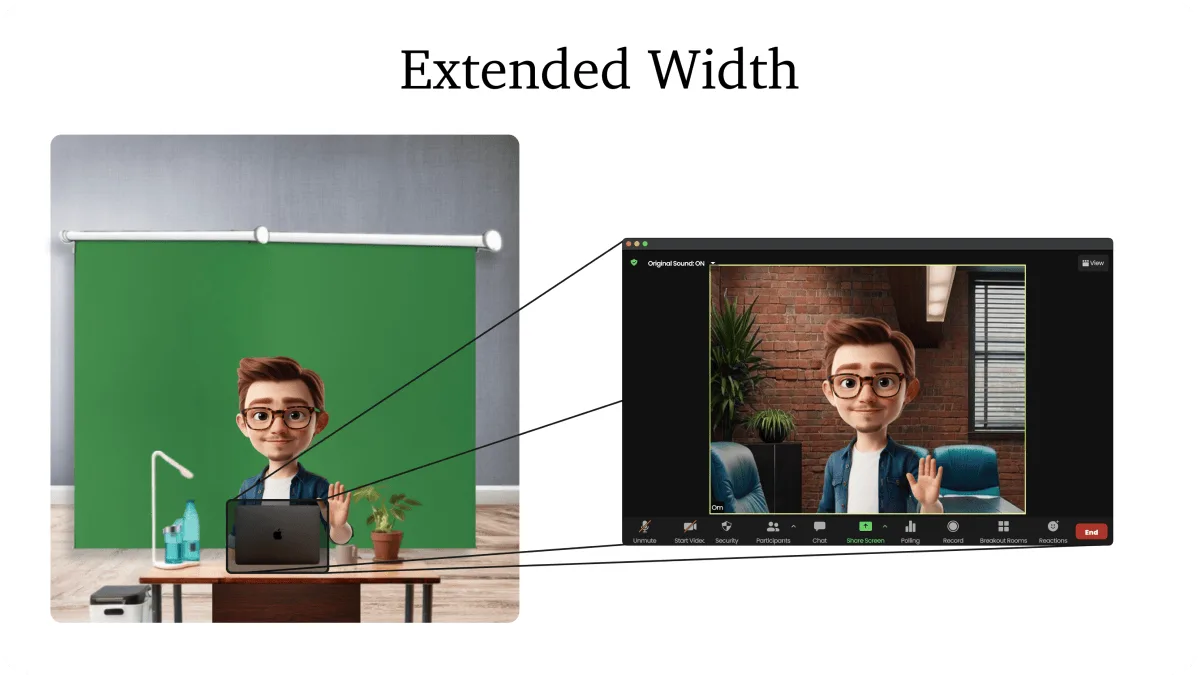
Existing screens are fixed at whatever width you bought. GREP extends to whatever the shot needs - a one-person meeting, a group video, or a full projection surface.
2. White projection
Turn the roller over and the green becomes a poly-white projection surface: a screen for presentations and films, or a whiteboard while it is mounted on the wall.

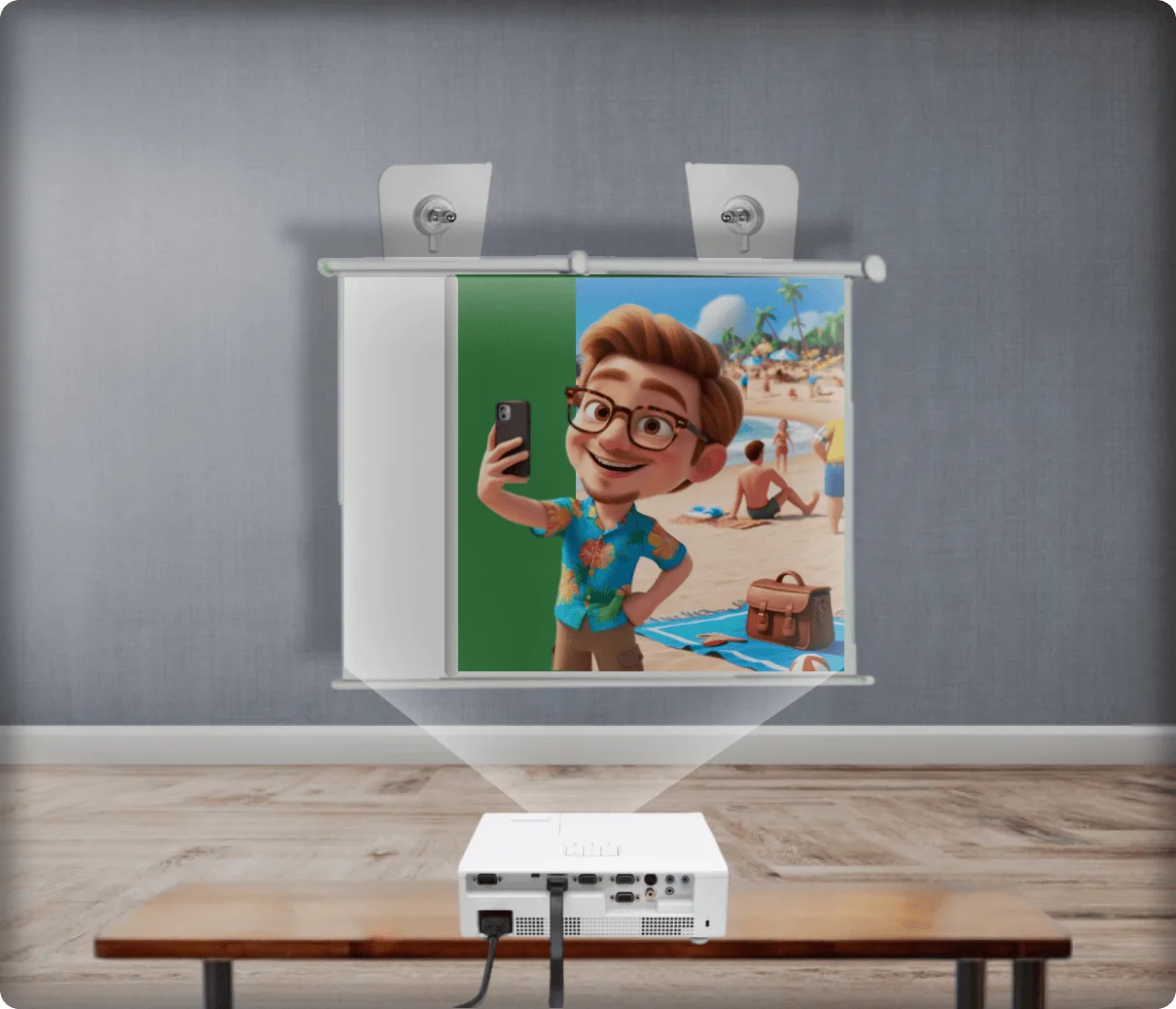
One tester used both sides in a single evening - green to shoot against, then white to project the results back onto.
3. Sticky hooks
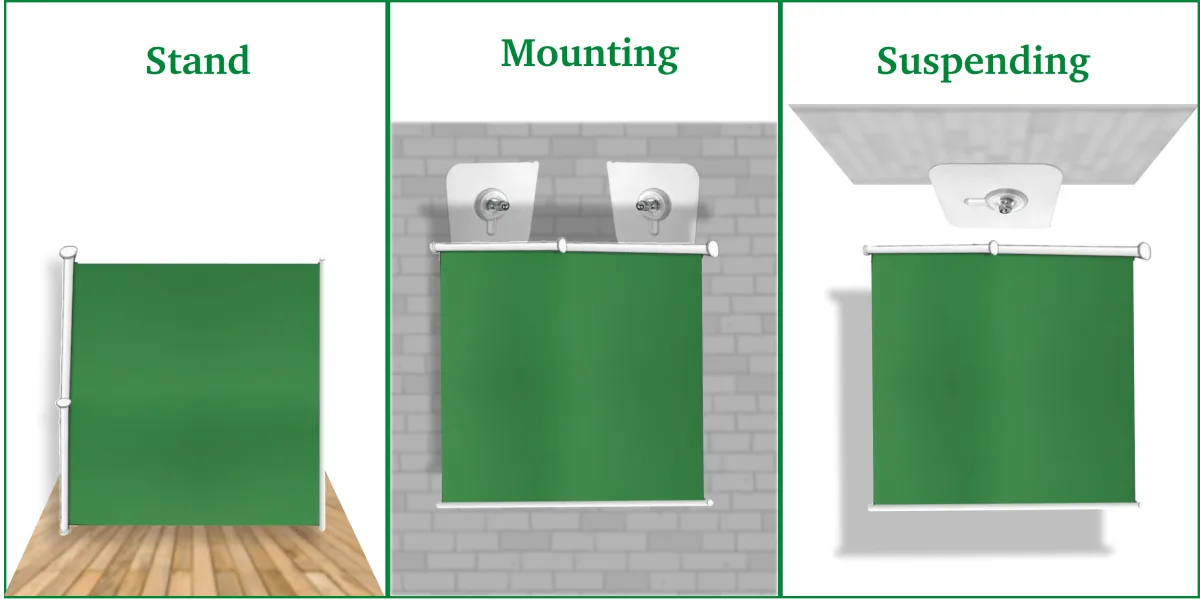
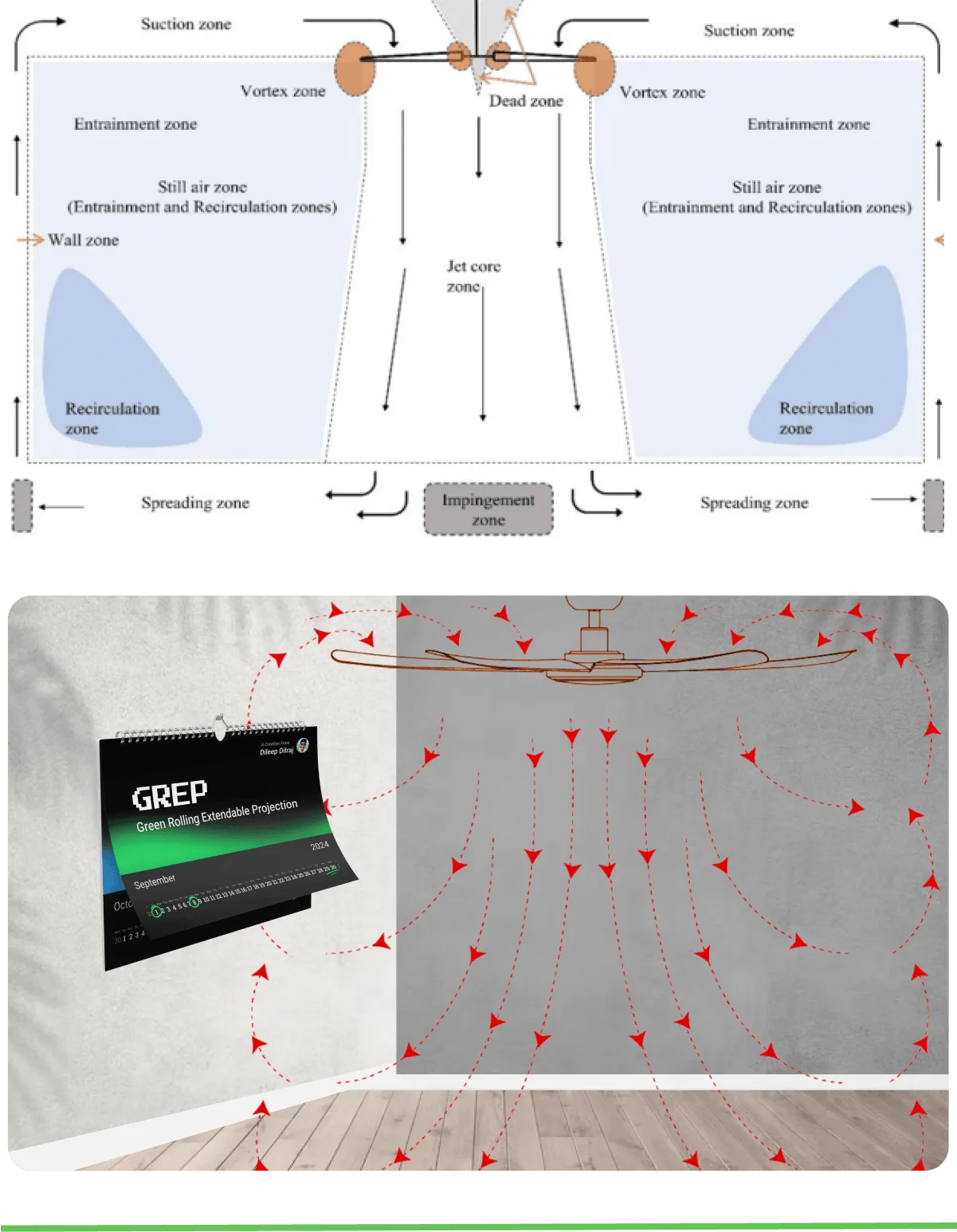
The roller stays flat against the wall even with a fan running, because the sticky hooks hold the top while the telescopic tubes brace the bottom.
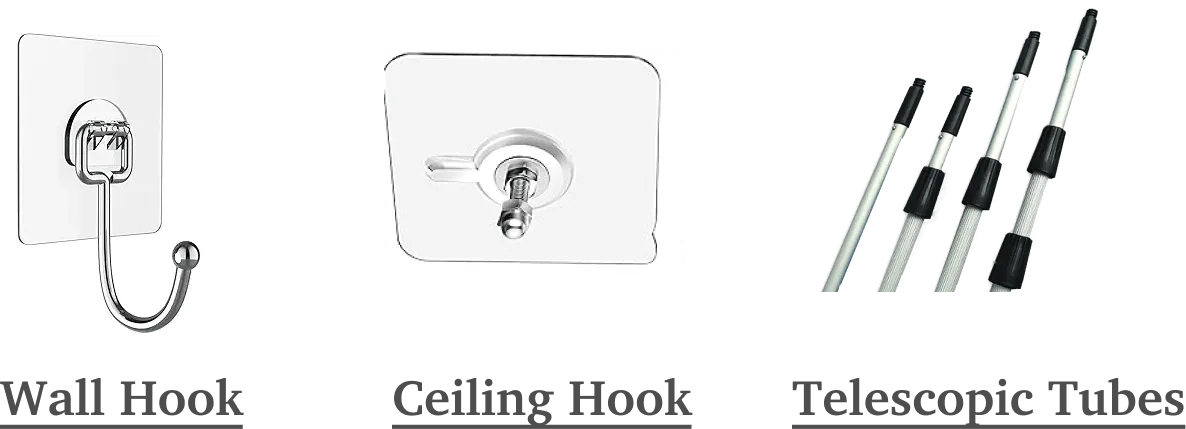
Why have both? Because rooms differ. A small room is best served by hooks and a flat wall; a living room might need the roller standing free on its telescopic tubes; a ceiling hook buys height for projection. Each accessory covers a room the others cannot.
4. Mount to chair
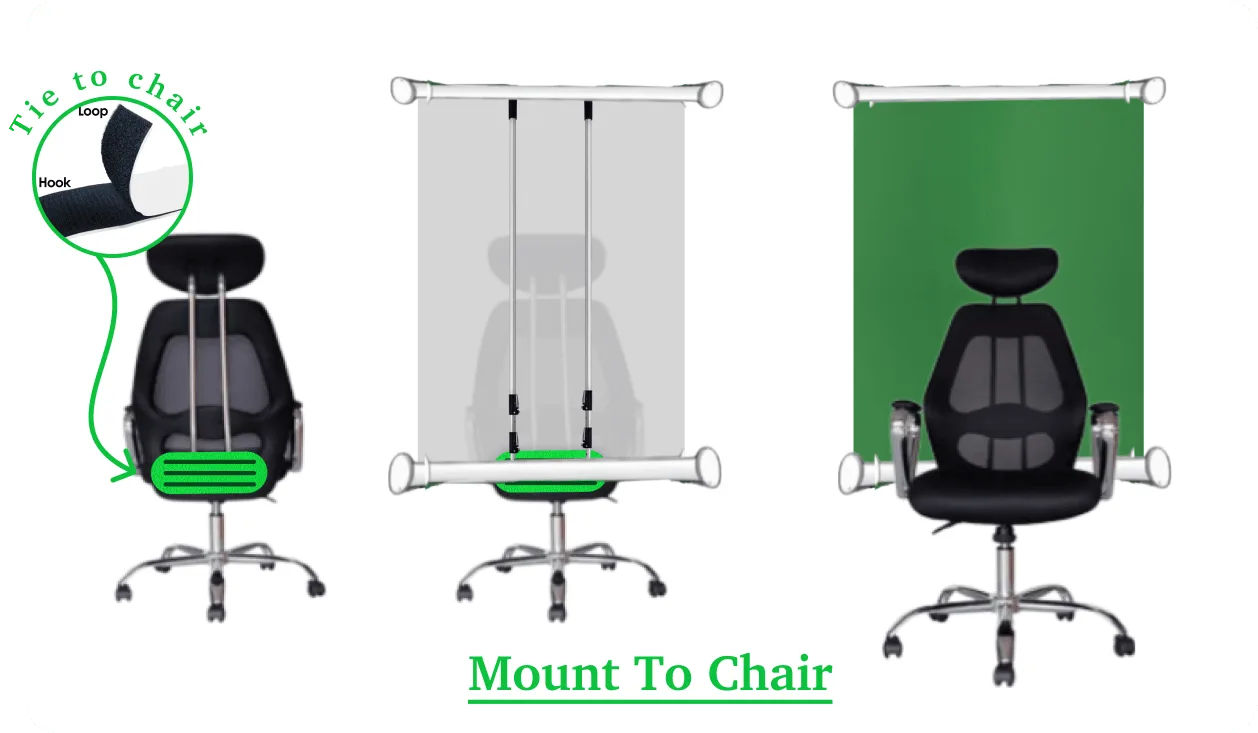
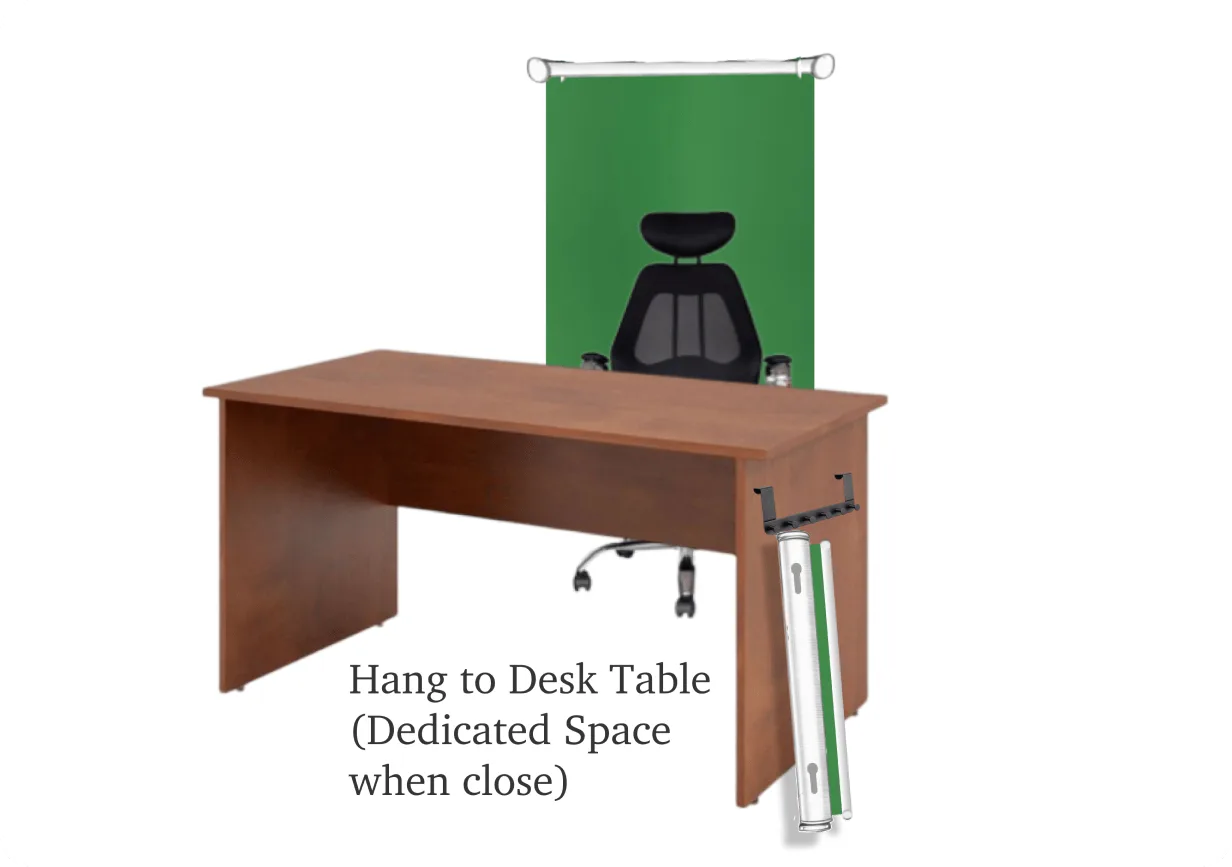
The pandemic left a lot of people with a permanent home office: a desk, a chair, a lamp. A slide-on bracket clips the roller to almost any chair, and when it is closed the built-in supports let it hang off a desk edge or a pegboard instead of taking up floor space.
5. Magnetic lights
A green background is only half of a clean key - the other half is light, and lighting is usually the expensive part. GREP ships with two kinds. A subject light shapes the face and body so the camera has something clean to cut around, and surrounding lights flatten the shadows the cloth casts on itself. Both offer more than 50 shades, and the magnet in the base grips the steel telescopic tubes or anything else ferrous within reach.
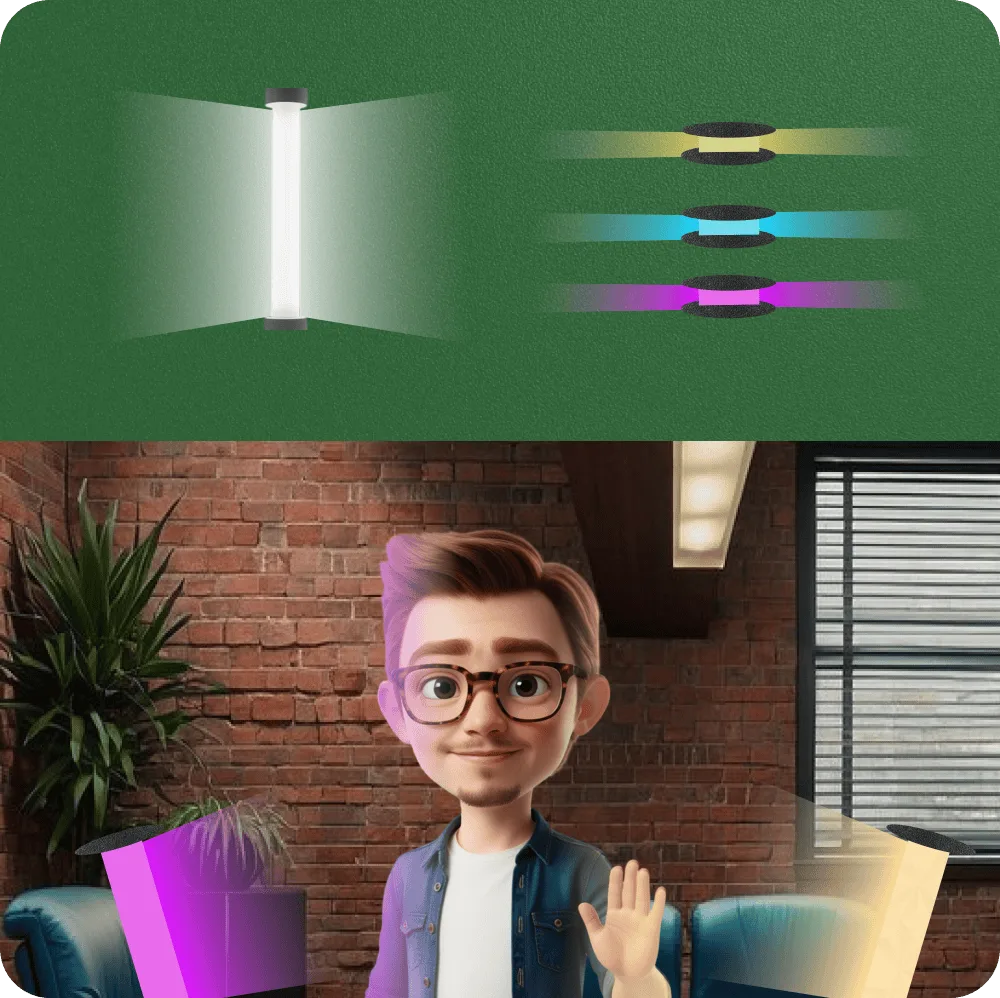
The origami structure lets you both dial the light density down and fold each lamp flat for storage.
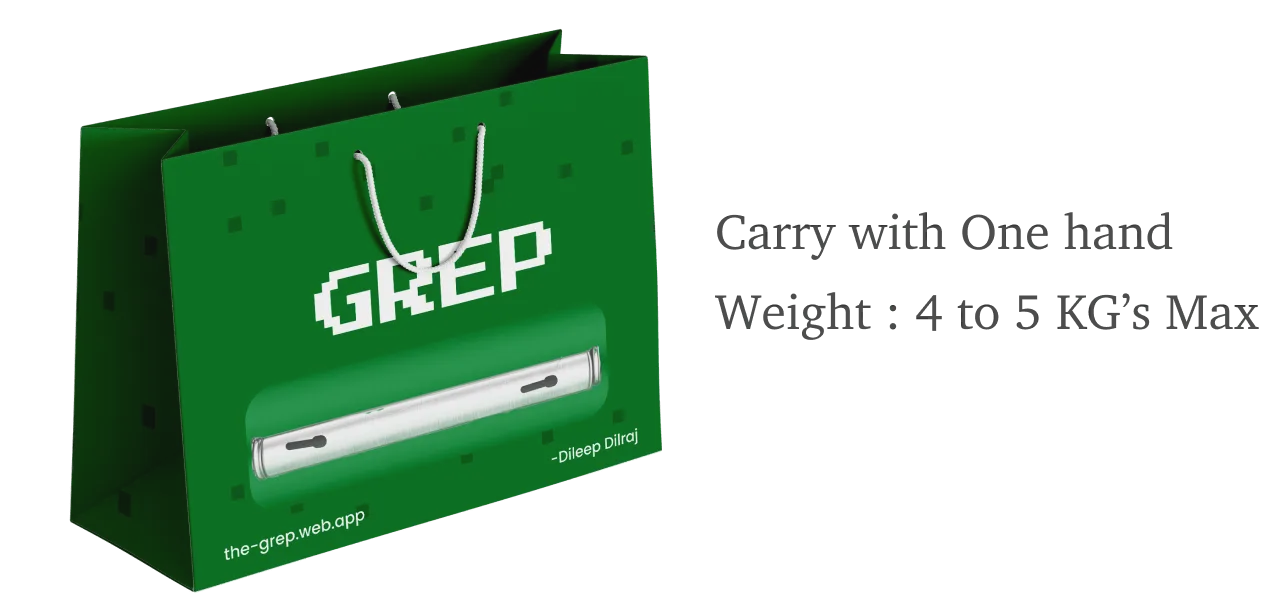
Closed, the roller fits inside an ordinary medium-sized bag, which is the whole point: a backdrop you resent carrying is a backdrop you leave at home.
The decisions behind it
A finished product hides the arguments that produced it. These are the questions I had to answer along the way, and where I landed on each.
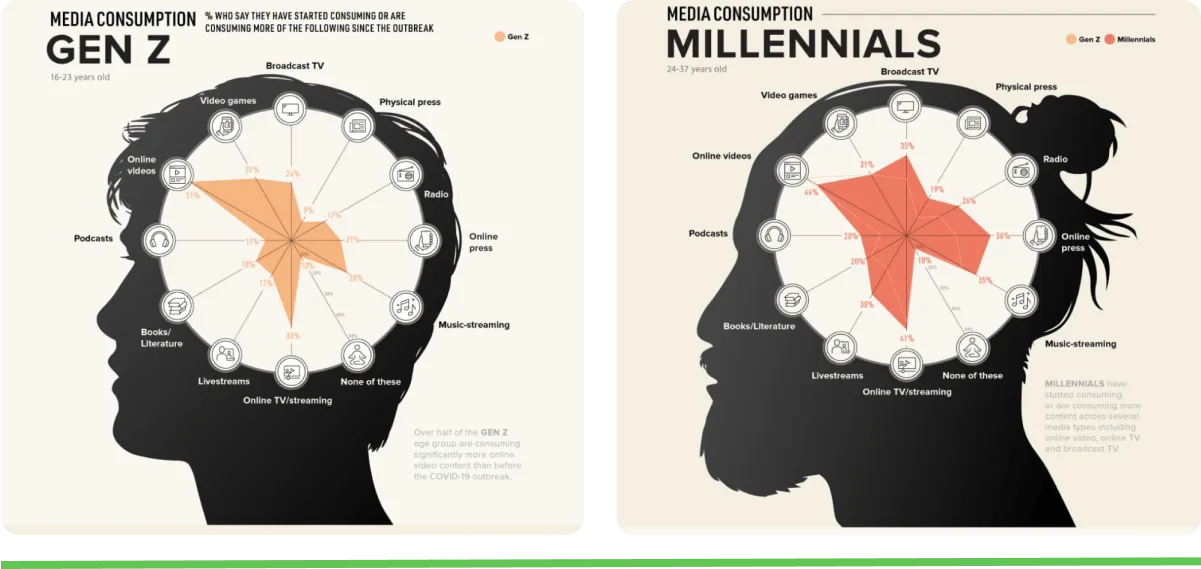
Why focus on Gen Z and Millennials in creative work?
These two groups use the product in the most demanding ways - making videos and holding their own in meetings - so they surface problems fastest. Gen Z question why a thing works the way it does, which throws up ideas nobody asked for. Millennials have lived through enough shifts to judge what will actually be adopted. Between them I got both invention and realism.
Why does a screen need to extend at all?
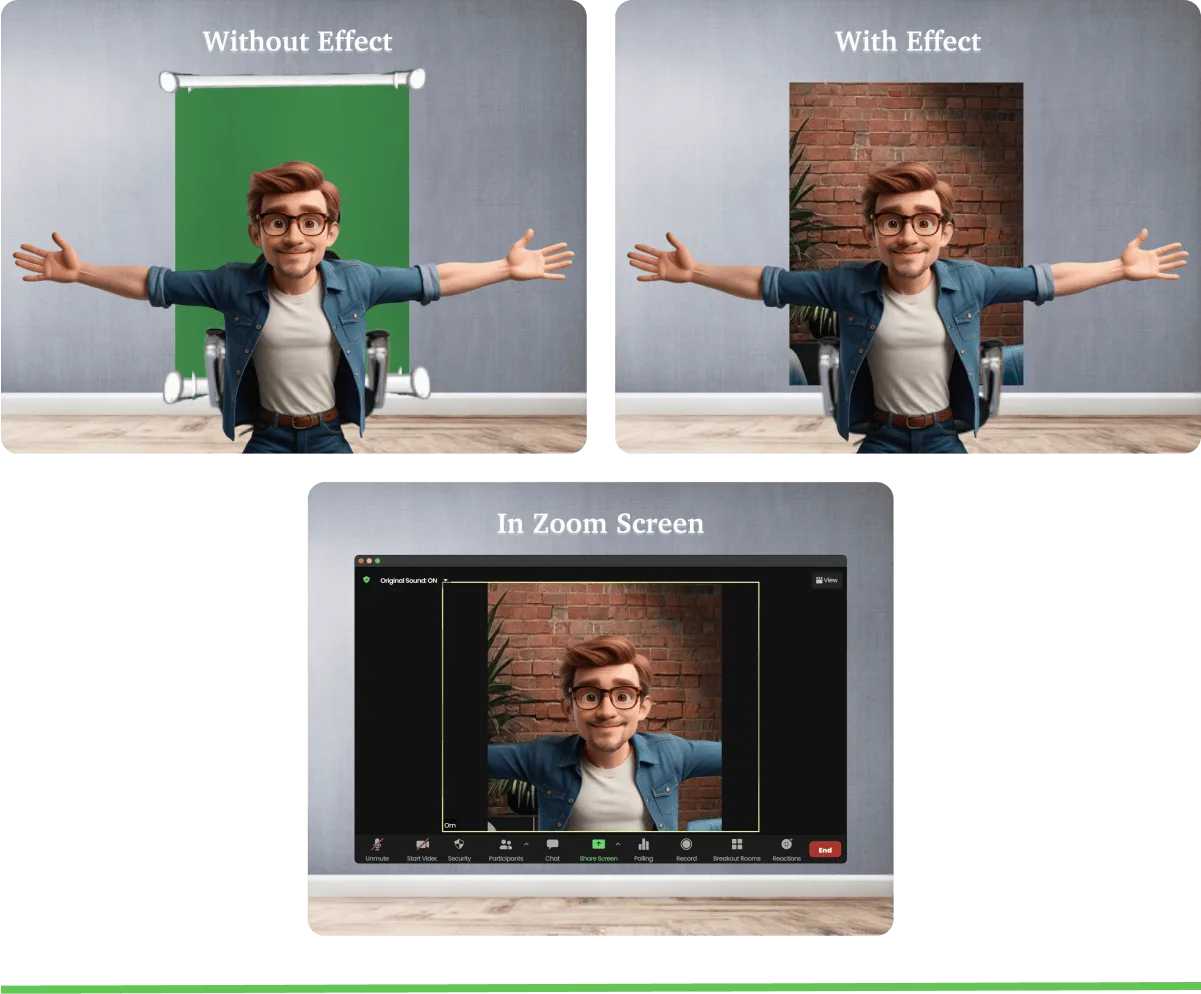
Affordable screens are narrow, and the wide ones are bulky enough to be a two-person job to move. That matters more than it sounds: a narrow screen covers your head and torso but nothing else, so the moment you gesture, your hands leave the green and the software loses them. Full-body shots need width the market does not sell cheaply. Rotating the ring locks on each side joins one GREP roller to the next, which is how you get it.
Why is the back of it white?
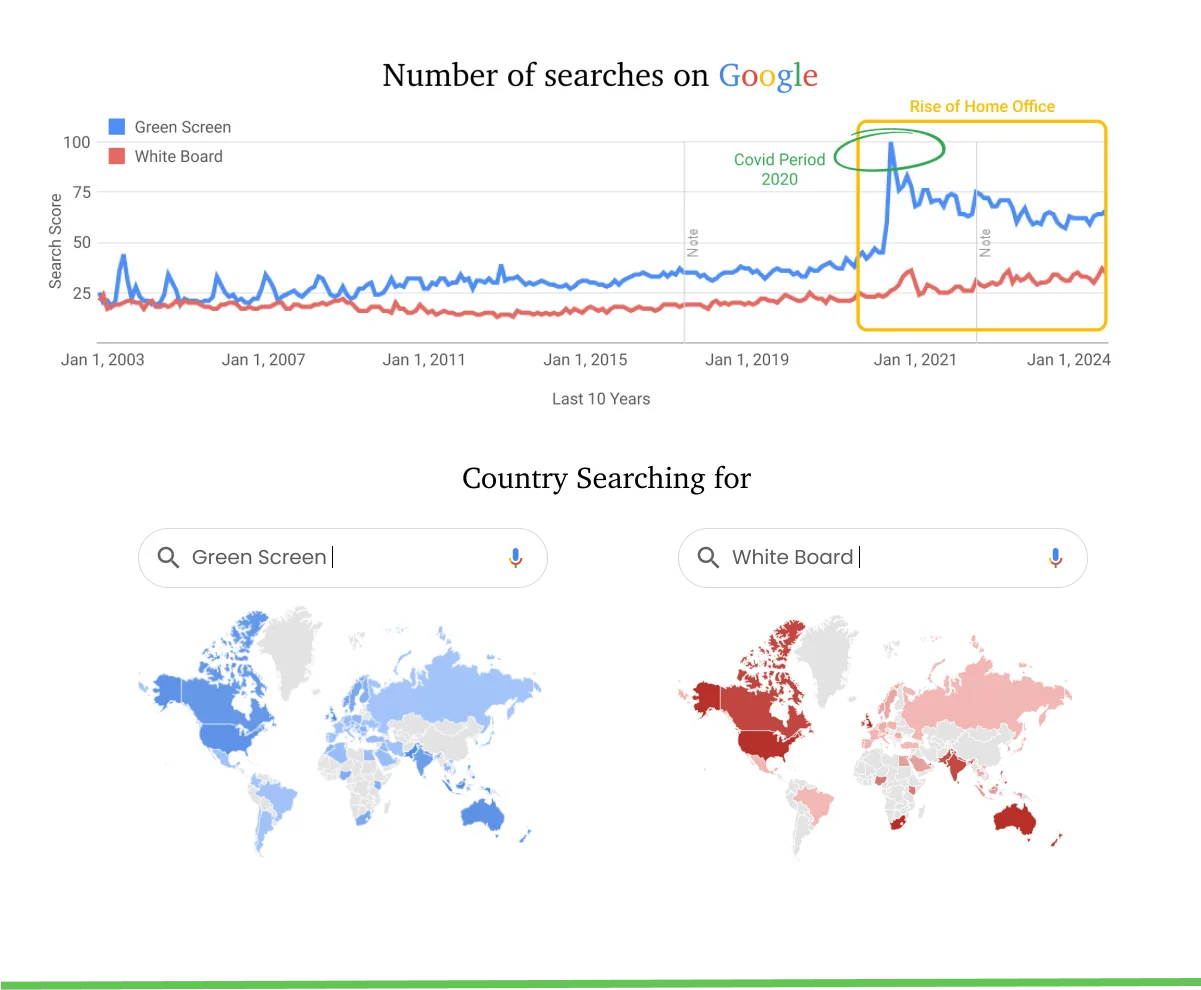
I wanted this to be a thing you leave up rather than a thing you fetch. Plenty of home offices already keep a separate whiteboard, and some people hang one simply to block window light while recording. Putting a whiteboard on the back of a surface that is already on the wall removes that second object entirely.
There is an aesthetic argument too. A sheet of dark green hanging in the middle of a room is an eyesore between shoots; turned to the white side it reads as part of the room. It also opens a second use - a projection screen for a film indoors or out - which widens both who the product is for and how people find it.
If it hangs on hooks, why include telescopic tubes?
Not every room can take a wall mount or a ceiling hook, and not every shot wants the screen right behind the chair. The tubes stand the roller wherever you need it, at the height you need, in less time than mounting takes. They earn their place even on a wall-mounted screen: airflow from a fan sets a hanging sheet moving - the same drift you see in a wall calendar - and a braced foot stops it.
Why ship lights with a backdrop?
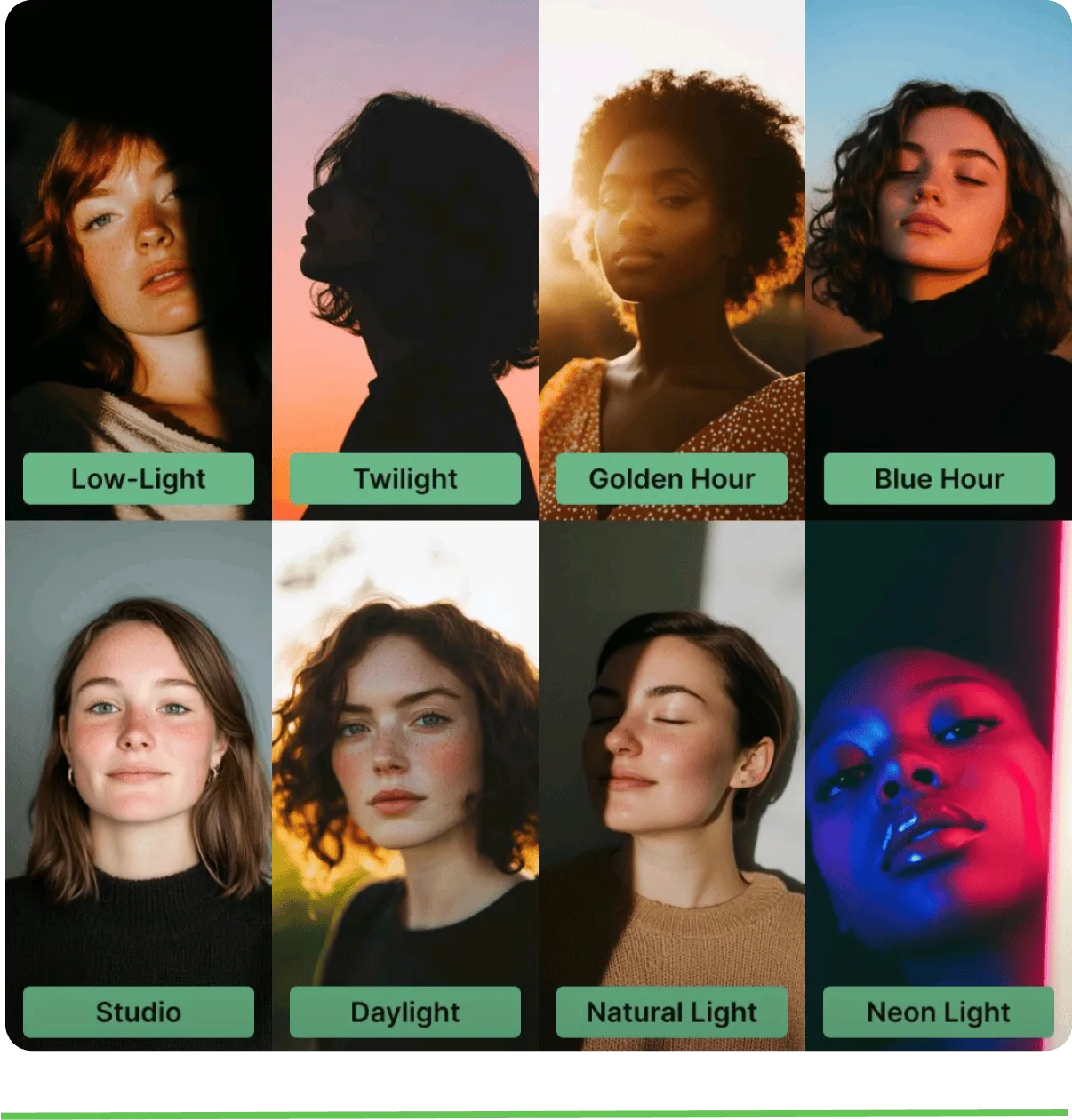
Lighting is what separates a usable key from a noisy one, and most rooms do not have it. Professionals typically run two: one matched to the subject's skin tone, one to lift the screen itself. The GREP lights cover both, with over 50 adjustments, and testers found uses I had not designed for - one used them outdoors to give a projector night a cinema feel.
Why 2'5" wide, and not wider?
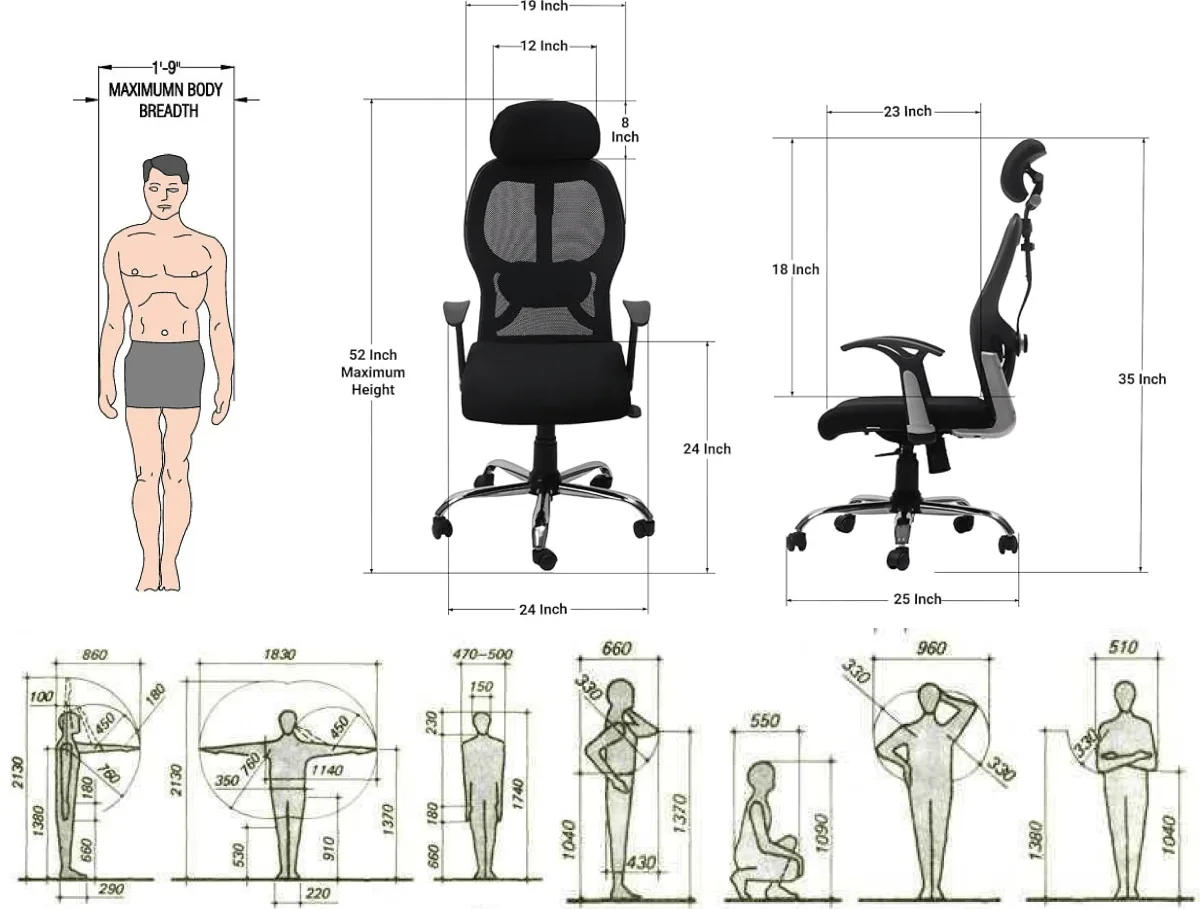
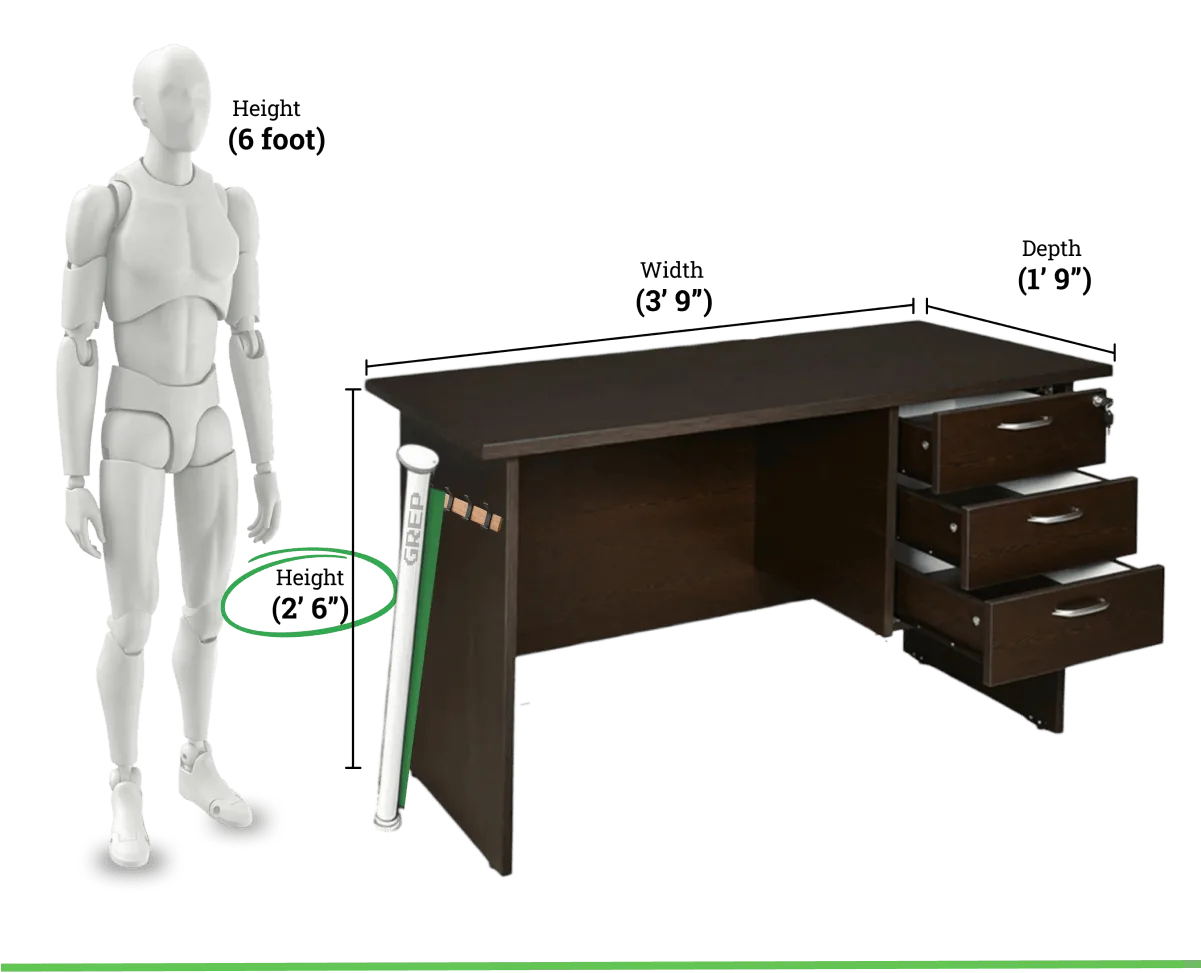
The number comes from the body and the furniture around it. Average shoulder breadth is about 1 foot 9 inches, and most office chairs top out near 2 feet 3 inches, so 2'5" frames one person cleanly. Most desks stand about 2'6" high, which means a closed roller hangs neatly in the dead space at the side of a desk.
There is a commercial argument as well. The limitation - one person per roller - is also the upsell: two rollers ship as standard, and a group shoot is either another roller bought or a colleague bringing theirs to link on.
Two light objects beat one heavy one. Width costs weight, and weight is what stops the product leaving the house - so the roller stays small enough to drop into a shopping bag.
Future plans
A few things I would change in a version 2.0:
- Durability. Harder-wearing materials, so the mechanism outlives the fabric.
- A smoother roller. The spring mechanism works, but it should open and close with less resistance.
- Remote and app control. A handset and a Bluetooth app, so the lights can be adjusted without leaving the frame.
- Sound-absorbing fabric. Several people mentioned room noise while recording. A fabric that absorbs some of it would help where acoustic panels are not an option.
- Colour options. Green and white, green and blue, blue and white - chroma key needs vary, and so does taste in what hangs on a wall.
These are directions rather than commitments. I am still working out which of them survive contact with manufacturing.
Lessons I learned
What this project taught me, beyond the product itself:
Time management
How to go deep on an idea inside a fixed timeframe, holding the detail and the whole in view at once before moving on.
Research experience
How to research and shape a physical product against a market that is already moving.
User perspectives
How differently people read the same simple object, and how often they use it past the limits it was designed for.
Creative exploration
Running Crazy 8s repeatedly produced far more ideas than I needed - and only a handful stood up to a real user goal. That is the point of running it repeatedly.
Interview skills
How to frame a question so the answer tells you something you had not already assumed.
Branding insight
How to build an identity for a physical product. The GREP logo is set in Press Start 2P, a pixel face, which is a deliberate contradiction: this is a physical object whose entire job is digital.
The green side exists so software can replace pixels cleanly; the white side turns projected light into a bright, even reflection. A physical product in service of a digital one - the logo says so before the copy does.
One last thing
This is a long read, and deliberately so - it is the closest I can get you to sitting beside me while I take a problem apart from scratch. I am open to work, and just as open to being told where this is wrong.
A note on scope: I am not a physical product designer by trade. GREP is an exercise in applying user experience thinking to an ordinary object in an ordinary room, and in showing how far that thinking travels once it leaves the screen.